

Nazir Masih, Martyr Lynched May 25, 2024 Declared Dead June 2, 2024 Wife Allah Rakhi Died June 21, 2024 |
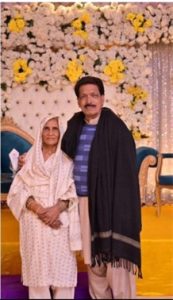 Nazir Masih, aged 74, falsely accused of blasphemy and brutally assaulted in Sargodha city at 7 am on May 25, succumbed to his severe injuries on Sunday night, June 2, 2024. After the attack on May 25, Masih’s condition remained precarious, with limited updates provided to his family. Reports emerged on May 27 that Nazir had died, but his death was not verified by the police until June 2.
Official reports state that Nazir sustained the injuries on the day of the attack and underwent major head surgeries. Activists and locals speculate that he died during transport to the hospital on May 25, 2024, but was kept alive artificially to delay the news until the situation calmed down. Nazir was not safe in the private hospital; due to security reasons, he was shifted to the Central Military Hospital (CMH) in Rawalpindi.
A large number of local Christians gathered for his funeral. Masih was put to rest at the local cemetery on Monday, June 3, but the timing of the funeral and hasty burial adds to further speculations. Mainstream media kept silent and did not cover the news, while social media was full of activity and fresh updates.
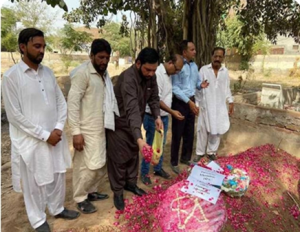
Canadian Aid Persecuted Christians (CAPC) has learned that Allah Rakhi, the wife of martyr Nazir Masih died on June 21, 2024, in Sargodha at the age of 72 years due to heart failure.
| Published earlier https://capc.life/mob-violence-in-sargodha-city/ |
The day Nazir was attacked

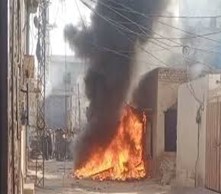
The horrifying incident happened at 7 a.m., May 25, in Gillwala, Sargodha City, when Masih’s envious neighbor leveled false accusations of blasphemy, i.e., burning pages from the Quran while Masih and his son Sultan Masih disposed of trash from his shoe factory. An enraged mob quickly gathered in front of Masih’s home, armed with rods, sticks and bricks. Police were alerted and despite 2000 police deployed in the area, Masih’s shoe factory was ransacked, looted and set ablaze, the house vandalized, and the family besieged. The whole family locked themselves in their house until police arrived. While the police were escorting the family, all were directed to turn right and get into the police vehicle. Mistakenly, Nazir Masih, aged 74, turned left, tripped and fell to the ground, and was seized by the extremist Islamic mob who started viciously beating him, leaving him with several broken bones and other severe injuries. The local police managed to rescue the seriously injured Masih from the clutches of the violent crowd and rushed him to the local hospital. The mob attacked the ambulance that was to transport Masih to the hospital, throwing bricks and stones at the windows. The terrified driver ran away to save himself, but a policeman tried using his car key which worked, and he drove the ambulance to the hospital.
Although he was in critical condition, Masih was reportedly charged with blasphemy (sections 295 A, 295 B) and the Anti-terrorism Act. The Police imposed section 144 (a week-long ban on public gatherings) twice: once following the incident on May 25, and again on June 2nd, the day Masih’s death was announced.
Curiously, the death certificate reads: “Not valid for court.” The lawyer thinks this may be deliberate to weaken Nazir’s lynching court case.
Local media say police arrested 150 people in this case and registered cases against dozens of Muslims, including youth and women. Participants in the mob reportedly belong to Tehreek-e-Labbaik Pakistan (TLP), a far-right party known for its radical extremist ideologies and violent protests against any change to the blasphemy law in Pakistan.
Extremists Defiantly Support Lynching
On Sunday, June 9, 2024, barely two weeks after the brutal lynching of Nazir Masih in Sarghoda, Pakistan, the far-right Islamic party Tareek-e-Labback (TLP) held a huge rally in the same city, gathering 2,500 supporters to protest the arrest of the killers. The local TLP leader Qadri pubicly endorsed the lynching, promising similar future violent action against so-called “blasphemers”, using derogatory slurs against Christians and warning police not to protect them. Such demonstrations by extremists serve to obstruct justice, intimidate law enforcement, and terrorize the Christian population.
| (Read more at https://morningstarnews.org/2024/06/massive-rally-in-pakistan-backs-killing-of-christian/) |
Predictably, on June 13, the local court judge bailed out 47 suspects who had been arrested for lynching Nazir Masih. Those released on bail in this case were dancing in front of a local church and Christian house. (Read more at https://www.christiandaily.com/news/bail-granted-to-suspects-in-killing-of-christian-in-pakistan.html)
This barbaric incident of unspeakable injustice highlights the ongoing plight of religious minorities in Pakistan. This is not a random incident but reflects broader, systemic problems in which religious minorities, especially Christians, face increasingly severe persecution.
In a fact-finding report published in October 2023, the Human Rights Commission of Pakistan (HRCP) pointed out the misuse of mosque loudspeakers and pulpits in Sarghoda District to press for FIRs against the Christian community and instigate violence against them. https://www.dawn.com/news/1779737
The Tehrik-e-Labaik Pakistan (TLP), a particularly egregious group perpetrating vigilante justice targeting Christians and other minorities, should be brought to justice along with their supporters. The TLP was formed in 2011 to protect Pakistan’s draconian blasphemy laws. Belonging to the Sunni Islamist ‘Barlevi’ school of thought, it considers itself the defender of Prophet Muhammad’s honour and demands severe punishment for those who do not believe in the sanctity and finality of the Quran.
The Chairman of the Pakistan Ulema Council, a body of Islamic scholars, called for swift justice, stating that taking the law into one’s own hands was both unlawful and illegal. The Chairman said that Muslims and the state must protect non-Muslims in Pakistan. However, a careful analysis of continued incidents of vigilante justice shows very little has been done in previous incidents. In the Jaranwala incident of August 2023, where 26 churches were set ablaze, all detained suspects have been freed on bail, and the court has halted proceedings due to defective police investigation and weak prosecution. There was similar inaction following the Gojra incident of 2009 in which 40 houses burned and 7 people died.
Christian Community Shaken to the Core
Despite the dangers and challenges, most Christians in Pakistan continue to practice their faith with courage and resilience. They rely on their strong faith and the support of their community to navigate the difficult and sometimes life-threatening circumstances they face. But after the recent terrifying incidents in Jaranwala and Sargodha, with little prospect of reform to the blasphemy laws in sight, Pakistan’s Christians will be wondering if they have a future in the country.
In particular, for eight shoe factory employees and the family of Nazir Masih, life may never return to normal. Sultan Masih, Nazir’s son, says that their family has lost everything. After his father was killed by the mob, his mother died of heart failure. The shoe factory is abandoned, the raw materials were set on fire, and the shoes ready for sale were looted by the crowd. They had no insurance coverage, as the insurance system is not common in Pakistan, so there is no way for them to recover their losses. In addition to losing their jobs, they now carry the fear that no employer would hire them in Pakistan, not only because they are Christians but because they are connected to this case.
The Pakistani government must take steps to protect its citizens from such heinous acts of violence and ensure that justice is served for the victims. In addition, the international community must speak up against such atrocities and stand in solidarity with those who have been unjustly targeted.
Nadeem Bhatti, president of CAPC, stated that during the last decade, a number of Christian localities were attacked and set ablaze but the courts are lenient in punishing the culprit according to the law. They generally adopt a “catch and release” policy, which does nothing to deter future incidents. The rapid increase of intolerance and hate against non-Muslims terrifies religious minorities, creating a deep sense of insecurity within their own country. The state has failed to provide safety and security to the Christians living in Pakistan.
Nadeem Bhatti adds: “It is the failure of a justice system that the attacks on Christians are carried out one after another. The justice system of the country is poor and corrupt. The suffering, marginalized Christians face attacks and accusations, and justice is not served in any major mob attacks or killings of Christians. Last year in the Jaranwala case 21 churches and 280 houses were ablaze. The individuals responsible for the case were never punished. The story behind every attack on Christians is different in reality, just like Nazir Masih’s lynching. Nazir owned a small shoe factory and he sold his factory-made shoes to Ayub Gondal, a Muslim neighbor. The payment from Ayub was delayed. Nazir demanded the payment to order raw materials for his business. But Ayub denied paying him, instead, Ayub fabricated the story of burning pages of the Quran. Christian life value is ZERO in Pakistan. TLP is the defender of blasphemy law in Pakistan, this law is used as a tool to persecute, attack and kill non-Muslims.”